Introduction | परिचय
By the third day of Navratri (नवरात्रि), home is already filled with smells of ghee, incense, and sweet stuff boiling in the kitchen. The barley in the Kalash has grown tiny little green shoots at this stage; kids watch their growth day after day, in spite of exhortations from seniors not to touch it. The diyas have been burning two nights in a row; their light unflickering, their smoke curling in and out, and darkening the brass lamp at the base.
On 24 September 2025, the observance of Tritiya (तृतीया) is dedicated to Maa Chandraghanta (माँ चंद्रघंटा). She is revered as the deity associated with valor and tranquility, characterized by her bell that dispels fear and instills a sense of bravery. The act of worshipping her embodies a duality of fervor and serenity, akin to power enveloped in tenderness.
Who is Maa Chandraghanta? | माँ चंद्रघंटा कौन हैं?
Having been married to Lord Shiva as his wife, Parvati was given the name Chandraghanta. The symbol of the crescent moon (Chandra) shaped in bell (Ghanta) form resides in her forehead. This is how she acquired this name.
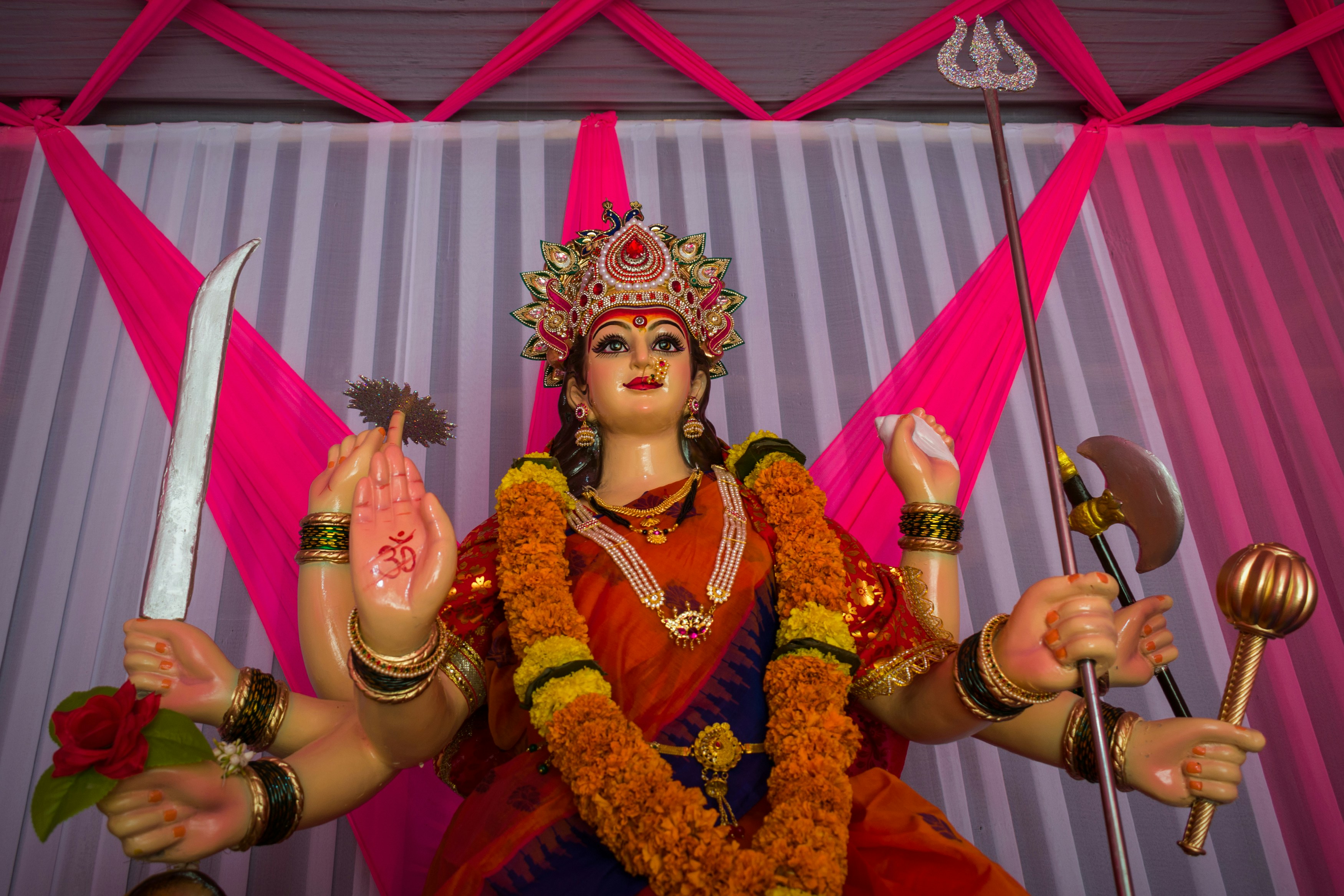
She sits upon a lion. Ten hands, each one grasping something: trident, mace, sword, bow, arrow, lotus, rosary, kamandalu. One hand uplifted in blessing. She appears fierce in photographs, not scary. More as if she battles on your behalf, not against you.
Families often describe her to kids as "the goddess who protects but also loves." This paradox is why her form is worshipped; she balances strength and compassion.
Muhurat and Puja Timings | मुहूर्त और पूजा का समय
Tritiya puja is in the morning. The house appears busy before sunrise, sweeping floors, lighting incense, and placing out flowers.
- Tritiya Tithi (तृतीया तिथि): 24 September 2025
- Morning Muhurat: At sunrise until mid-morning Abhijit Muhurat (अभिजीत मुहूर्त) occurs between 11:51 AM and 12:39 PM.
Seniors often say, "Morning time is most sacred." Thus, family gathers near to the altar, and the thundering conch shells announce the beginning of the day's prayers. Children cover their ears and laugh even as they bring their palms together.
Color of the Day | दिन का रंग
Day 3 is painted in orange (नारंगी / केसरिया).
Its hue signifies the strength of fire, life, and commitment. Orange saree-clad women move purposively through the kitchen, and men sport saffron stoles over their kurta, and young girls knot orange ribbons in their plaits. The puja altar radiates warmly under marigold garlands, whose smell is simultaneously powerful and earthy.
Saffron kheer, or kesari halwa, as it's also called, was made in most houses. The aroma of saffron and cardamom fills the home long in advance of placing the offering before the idol.
Puja Vidhi and Samagri | पूजा विधि और सामग्री
These ceremonies are simple, but they have an inherent importance due to the environment surrounding them.
Puja Samagri (पूजा सामग्री)
- Picture or image of Maa Chandraghanta
- Orange or yellow flowers
- Fruits, dairy products, and vegetarian sweets (kheer, halwa, peda)
- Sandalwood paste (चंदन)
- Incense sticks (अगरबत्ती), diya (दीपक)
- Kalash holding germinated barley.
Puja Vidhi (पूजा विधि)
The altar is cleaned laboriously, and the idol positioned in the centre. A diya is lit, incense wafts out its sweet aroma, and flower puja follows. Bhog is kept in front of the goddess. Occasionally, younger ones attempt to sneak in too early, eliciting outbursts of laughter upon being discovered.
Then there's chanting. Slow, clear mantras said out loud. Bell-ringing Aarti. The entire family gathers, clapping in time to some, not to others. The voice echoes through the home, devotion and quotidian affection entwined.
Prayers and Mantras | मंत्र और प्रार्थना
मंत्र (Mantra):
ॐ देवी चंद्रघंटायै नमः ॥
Om Devi Chandraghantayai Namah
स्तोत्र (Stotra):
या देवी सर्वभूतेषु माँ चंद्रघंटा रूपेण संस्थिता।
नमस्तस्यै नमस्तस्यै नमस्तस्यै नमो नमः॥
Chanting builds to a crescendo as the bell rings out. It reverberates throughout the house, at times causing even neighbors to stop and listen. Children clap too eagerly, elderly people beam, and as a whole, it doesn't feel as much like ritual, but collective exhilaration.
Importance of Worship | पूजा का महत्व
Mother Chandraghanta is also revered as the goddess who bestows not only courage but also serenity. It is said to eliminate harmful impacts and fear by means of her bell and therefore develop awareness.
Worshippers think her blessings have:
- Courage (साहस) to endure life's struggles
- Protection (सुरक्षा) from harm and negativity
- Calmness (शांति) to maintain the heart stable
Some believe she rules over harmony in interpersonal relationships due to her connection to Venus (शुक्र). For many devotees, worship of this goddess serves as an impenetrable shield, offering strength from the outside and cultivating peace from within.
Story of Maa Chandraghanta | माँ चंद्रघंटा की कथा
Legends tell that when demons once threatened the world, Maa Chandraghanta appeared on her lion, weapons in all hands, the crescent bell glowing on her forehead. Her bell rang out, the sound shaking the skies, terrifying the asuras, and giving the devas courage to fight.
But to her devotees, she was still soft, bestowing serenity upon them. This is how children learn this tale during Navratri nights. Their parents tell them: strength is not brutality. It's security, it's mercy. That's why there's significance in Chandraghanta's appearance; she teaches us that power doesn't have to be at odds with benevolence.
Cultural Significance | सांस्कृतिक महत्व
Day 3 sounds louder than it did during the last two days. Bells clinking, conch shells blowing, Garba tunes drifting in from streets outside. Inside homes, clinking of spoons against steel plates as prasad is being distributed.
People carry orange-clad confection trays to their neighbors, and children taste the halwa before it cools down. Elderly people assemble, narrating stories of the goddess. Garba circles shine all the more brightly under orange dupattas and brilliant lights in Gujarat, and in Bengal, rhythmic strokes of dhak echo in pandals, where idol craftsmen put in last-minute touches to the idols. In villages, temple bells toll at dusk, as people offer coconuts and incense sticks, and an air of devotion permeates completely.
Navratri is more than ritual. It’s memory passed down, the sound of a bell that once startled you as a child, the taste of saffron that reminds you of your mother’s cooking, the way neighbours gather in evening aarti like extended family. Day 3 adds its own layer to that chain of memories.
Conclusion | निष्कर्ष
The third day of Navratri belongs to Maa Chandraghanta, the goddess with the crescent bell, riding her lion, fierce to demons but gentle to her devotees. She teaches that courage and peace can live side by side.
By dressing in orange, chanting her mantras, providing bhog, and hearing her tale, families bring blessings from her home to their home.
As sunset approaches, the echo of the bell in the air reminds devotees once more that fear has no bearing where faith abounds. Jay Mata Chandraghanta