Introduction | परिचय
On the second day of Navratri (नवरात्रि), the home is different. The Kalash from the last day appears to have acclimated to its position, the barley seeds are soaked in soil, and the continuous flame of the अखंड ज्योति continues to flicker softly. The excitement of Day 1 has mellowed down to something more serene.
On 23 September 2025, Dwitiya (द्वितीया), the second day, or rather, is dedicated to Maa Brahmacharini (माँ ब्रह्मचारिणी). She is celebrated for tapasya, patience, and the subtle strength of dedication. Her puja is one of less pomp and more quietness — the one that binds the family together in prayer.
Who is Maa Brahmacharini? | माँ ब्रह्मचारिणी कौन हैं?
She has in her name, she in fact, IS her story. Brahma signifies penance, devotion, and the search for truth. Charini refers to one who follows that path. She can be seen walking barefoot, in humble white attire, and with a japamala (जपमाला) in one hand and a kamandalu (कमण्डलु) in the other hand.
She is unmarried in this life, completely dedicated to Lord Shiva. Jewelry, weapons, nothing. Just austerity. Just focus.
When one sees her picture, one notices serenity. Yet, under that serenity, there's an unshakable strength — strength to wait, to endure, to concentrate without distraction. Families inform young ones that Brahmacharini teaches us patience, holding still, even if the distance appears too far.
Muhurat and Puja Timings | मुहूर्त और पूजा के समय
During Dwitiya, families again refer to the panchang before they begin puja. While time appropriate to it is important, inherent devotion is more important.
Dwitiya Tithi (द्वितीया तिथि): 23 September 2025
Morning Muhurat: Up to mid-morning after sunrise
Abhijit Muhurat (अभिजीत मुहूर्त) occurs from 11:51 AM to 12:39 PM.
In most houses, elderly people exclaim, "जल्दी करो, मुहूर्त निकल जाएगा," as young ones observe the diya being lit, not blinking as the flame becomes stable. It's not time per se. It's starting out in intent.
Color of the Day | दिन का रंग
Second day's color is green (हरा).
The hue represents development and equilibrium. On this particular morning, women don green sarees, men adorn themselves with green dupattas, and children are dressed in frocks and shirts that feature vibrant shades of this color. Ritual spaces are frequently embellished with mango leaves or tulsi (तुलसी), with the greenery contributing an organic vitality to the shrine.
Green colors beyond cloth or leaves; it represents a certain emotional condition, calm and stable, just as it would be the slow rhythmic flow of beads being chanted on a japamala.
Puja Procedures and Items | पुजा विधि और वस्त्र
These rituals today come across as effortless, as an extension of yesterday, but are being made available to Maa Brahmacharini this time.
- Puja materials (पूजा सामग्री)
- Image or Statue of Maa Brahmacharini
- White or green flowers
- Fruits and satvik sweets such as kheer or mishri
- Sandalwood paste (चंदन)
- Tulsi leaves
- Diya, incense sticks (अगरबत्ती)
Day 1: Kalash and barley sprouts
Puja Vidhi (पूजा विधि)
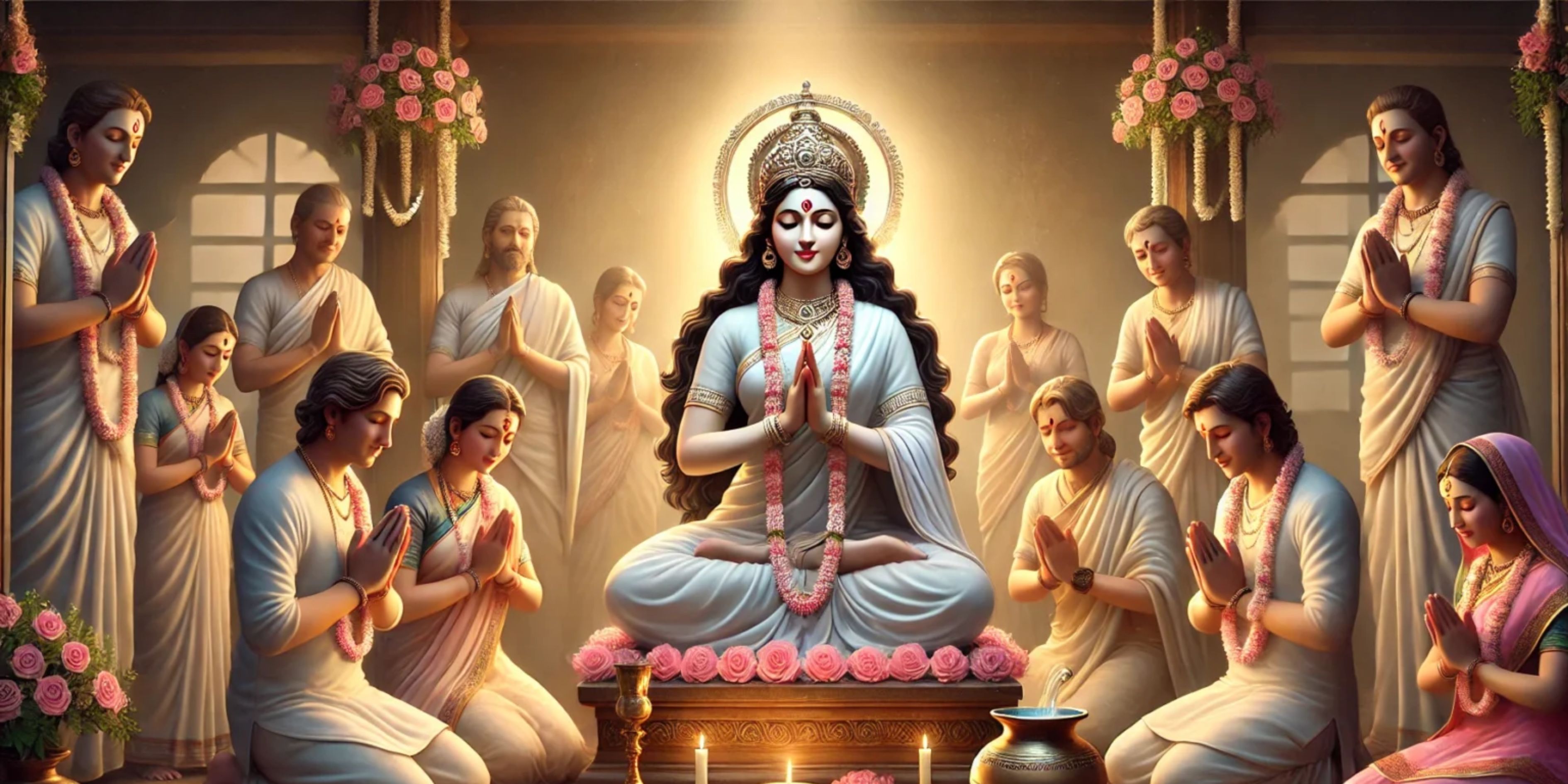
Puja begins as often as an altar cleaning ritual. The diya is lit, अखंड ज्योति re-checked, and flowers are placed in front of the goddess. Tulsi leaves and bhog are offered, and family members chant her mantra softly, beads of their own malas slipping between fingers.
Some have fasted, just eating fruits or an early satvik thali. Children, though curious and active, tend to revolve around the plate of prasad, anticipating the conclusion of the aarti in order to taste the sweet dishes.
Prayers and Mantras | प्रार्थनाएं और मंत्र Mantras of Brahmacharini are simple, but their import becomes great, as they are recited and concentrated upon.
Mantra and Prayer | मंत्र और प्रार्थना
“ॐ देवी ब्रह्मचारिण्यै नमः ॥”
Om Devi Brahmacharinyai Namah
Prayer || प्रार्थना
“दधाना कर पद्माभ्याम् अक्षमाला कमण्डलू।
देवी प्रसीदतु मयि ब्रह्मचारिण्यनुत्तमा॥”
As the family chants together, the sensory experience blends with the scented aroma of incense. The action goes beyond mere performing or formalism; instead, it represents an elegant practice of being present and aware.
Worship and Spirituality | पूजा और अध्यात्म
Mother Brahmacharini symbolizes self-discipline and repentance. She teaches us that strength here does not mean being forceful at all points sometimes, it means patience.
Her blessings are said to give devotees:
- Steadiness in understanding (बुध्दि में स्थिरता)
- Strength in meeting difficulties (सहनबल)
- Clarity and calmness (मन की शांति)
She's associated with the Swadhisthana Chakra (स्वाधिष्ठान चक्र), emotional states and creative production, and by venerating her, devotees think desire comes into equilibrium, and one has an unruffled mind.
Story of Maa Brahmacharini | माँ ब्रह्मचारिणी की कथा
Having been birth as Parvati, she desired to live in Shiva's proximity. To prove her dedication, she chose the toughest path tapasya. She went barefoot, renounced comforts, lived on fruits and leaves, and even renounced eating once, only having water to drink. The penance ran through centuries, and then millennia, and even through years.
According to the narrative, her steadfast dedication profoundly influenced Shiva, who ultimately acknowledged her as his partner.
Families recount this legend once every twelve months during Dwitiya. It instructs young people to believe that strength is not always characterized by loudness or swift action. It arrives sometimes in stillness. It sometimes means patience, persistence, and belief.
Cultural Reflections | सांस्कृतिक महत्व
Day 2 of Navratri is more comfortable. The high of Day 1 has faded; instead, there is an even rhythm. The diya burns constantly. The ladies in green are in the kitchen making bhog, their laughter as they pass on vrat recipes to one another. The little ones interject in the story, their voices breaking through the chants, and the grown-ups smile and go on.
Outdoors, people come together in community. In Gujarat, Garba rings spin through the nights, hues of green lighting up the assemblage. In Bengal, pandals are busier, as artists sculpt the idol of the goddess painstakingly. In villages, temple bells ring in the evening as devotees assemble with coconuts and flowers.
Worship, yes, but also memory. One recalls one's own mothers having fasted, one's own grandfathers recounting Parvati's tapas, one's own childhood experience of mishri tasting sweeter on this day than on any other day. Navratri is devotion transmitted across time, and Day 2 contributes another perspective to it.
Conclusion | निष्कर्ष
The second day of Navratri consists of celebrating Maa Brahmacharini, the divinity who did her meditation barefoot and only carried a japamala and kamandalu. Her worship doesn't highlight luxury; instead, it highlights patience, dedication, and inner strength, which springs from within.
Wearing green, reciting her name, fasting, or just sitting in stillness in front of her image, devotees bring her blessings home.
As the diya runs low and families come together in time for the evening aarti, the day leaves behind an echo: devotion is not always boisterous. At times, it is as uncomplicated as faith maintained over time.