Climbing Toward Devotion
Early morning in Gwaldam smells of pine and damp soil. The sky is pale, maybe still hiding behind mountain shadows. I strapped on my backpack and started walking toward Binatoli, following locals’ directions to Angyari Mahadev (अंग्यारी महादेव). I could see bits of mist curling between oak trees, the path steep in parts, forgiving in others.
After about 2 km, your legs start to burn. Your breath shortens. But you also begin to feel something, expectation, maybe peace, maybe just the earth under your feet.
Where Shiva Holds Court
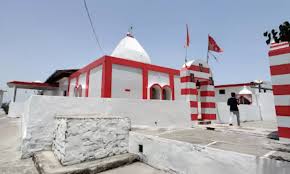
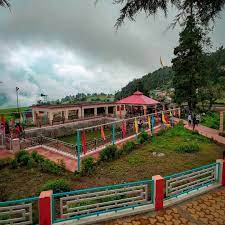
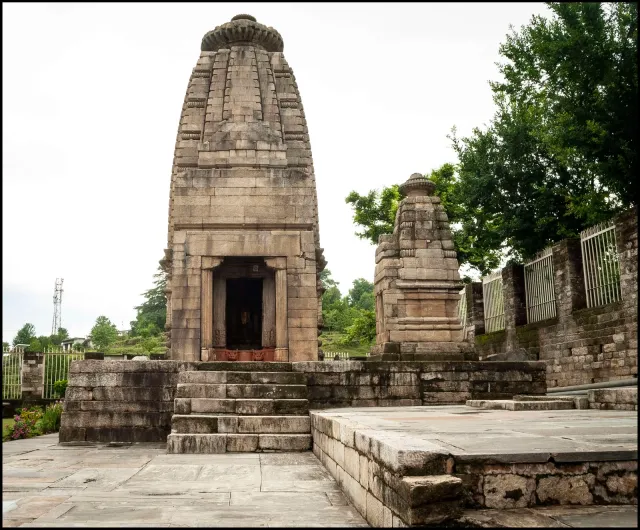
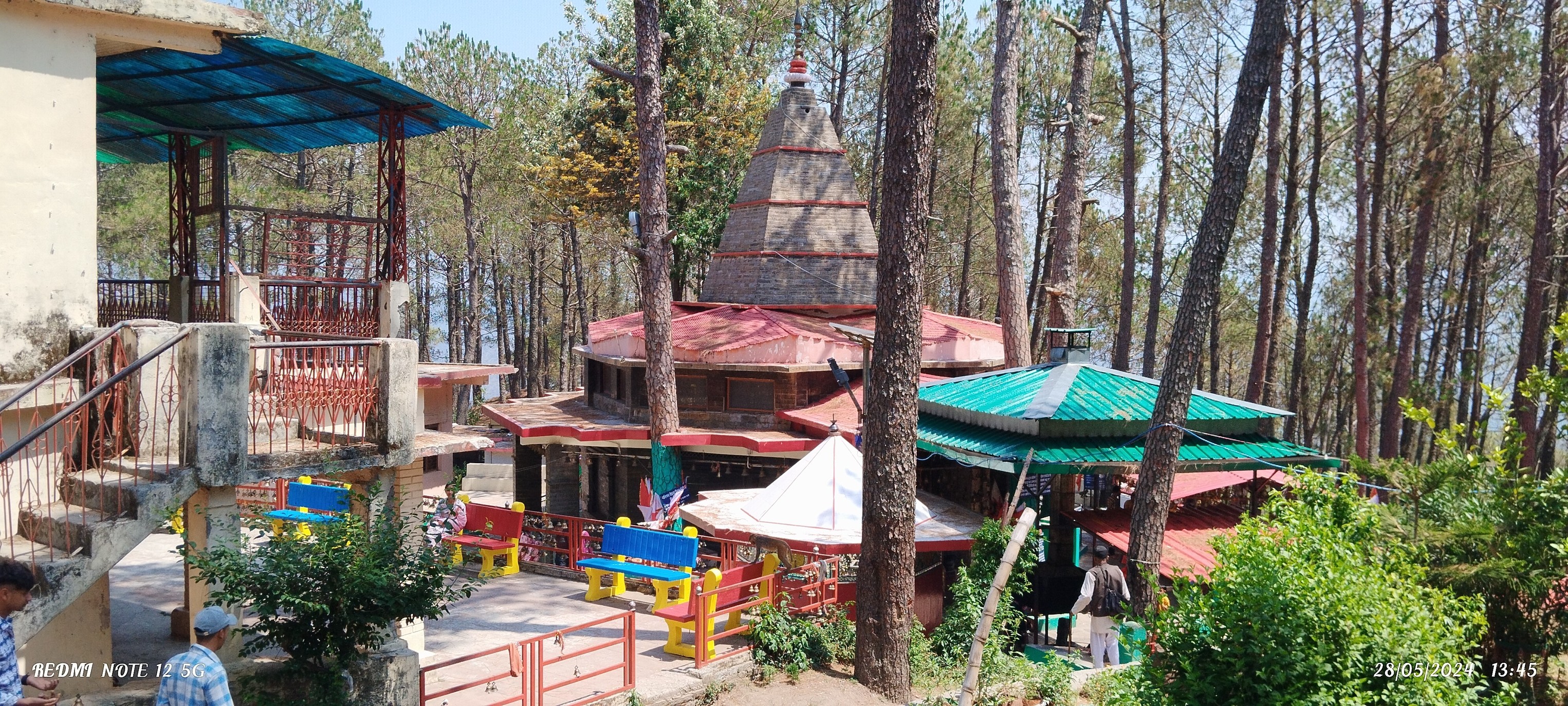
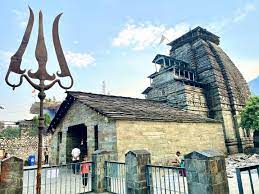
Angyari Mahadev sits near the border of Chamoli (चमोली) and Bageshwar (बागेश्वर) districts. It is not on a flat plateau or a grand mountain height. It is tucked in dense forest, above valleys, but wrapped in trees, with views down to green hills. The temple is ancient in feeling even if you don’t find exact dates. Stone walls, wood beams, a small shrine, humble.
People say the Shivling (शिवलिंग) here receives water (जल) from a nearby natural source. There is an upper part of the temple above the walkway and a lower part beneath it, near water. Pilgrims bring फूल (flowers), धूप (incense), offer प्रसाद (prasad).
Myth, Belief, and Heart
Legend says Maharishi Angyari (अंग्यारी ऋषि) came here and meditated deeply, pleasing Lord Shiva. Shiva appeared before him here. That Divine Darshan makes this place sacred.
Another belief is that at some old time, the rivers Ganga (गंगा), Bhagirathi (भागीरथी), and Gomti (गोमती) flowed here. Time changed things. Ganga and Bhagirathi receded, but parts of Gomti still flow near, in small streams. People who come with a sincere heart say their wishes are heard in the month of Sawan (सावन).
The Trek and Path
From the road near Gwaldam, the route is about 4-5 km on foot. First is the steep climb, rough, sometimes slippery, through oak and Burans (रhododendron) forest. Then a stretch that levels out. Then more climb. Then, a half-kilometer descent toward the lower shrine area.
The forest is cool even in summer. Leaves whisper. Birds dart across patches of light. Occasionally, moss-covered stones make footing tricky. But after every turn, the view opens to valleys, ridges, and distant peaks.
What You Experience Inside
When you arrive, the small courtyard feels quiet, like the forest paused. Shoes left outside. A sense of space between stones and prayer.
The shrine above the walkway has the main Shivling. Below, near the water source, is the secondary part where water trickles over rock, feeding the lingam. Devotees dip their hands and rub the cold flow over the stone. Lamps flicker with the wind.
You hear chants not loud, but steady. “ॐ नमः शिवाय” in soft voices. Someone rings a small bell. An older woman closes her eyes, head bowed. Children chase butterflies near rhododendrons.
In the Sawan month, many come. Murmurs of wishes, prayers, hopes for rain, hopes for relief, hopes for strength.
Why Pilgrims Walk and Stay
Pilgrims come not just for the temple but for what the hike gives: silence, nature, and introspection.
They stay in small धर्मशाला (dharamshala) or forest rest houses if available, sometimes in tents. Nights are cold, lamps casting shadows, wind rustling leaves outside. The temple lights glow like watchfires in the dark.
Many say that walking, climbing, and taking the path that tests you is part of the devotion. Each step becomes a prayer. By the time you reach the temple, your heart seems softer, more reverent.
Best Time & Practical Tips
When to go: The Sawan month is popular. Also good are late spring (April-June) and early autumn (September-October). Monsoon can make paths slippery. Winters are cold, possibly snow-covered.
What to carry: Good walking shoes, water, a shawl or jacket, some fruit/snacks, a flashlight or headlamp if you stay till dusk.
How to reach: From Gwaldam, Talwadi, or Gairsain. Up the road toward Binatoli. Then the trek starts. The route is free entry.
What to expect: Forest trail, small stream crossings, steep sections, views of valleys and peaks, occasional leeches in the monsoon, and cold evenings.
What Stays With You
The light on a rhododendron bloom. The echo of a bell in mist. The sound of water dripping over rock.
I remember after offering flowers, sitting quietly on a stone ledge, watching the valley below. Birds flew; a farmer’s whistle came from fields far down. Wind felt alive on skin. Even though the temple was small, it felt vast.
People who walked together, some strangers by the path, greeted each other with nods. Someone gave me a sip of चाय (tea) from a flask. Someone else shared मिठाई (sweet). Little kindnesses in sobering heights.
Why Angyari Means More Than Place
- It is not about grandeur. It is about presence.
- Because in Angyari Mahadev, faith lives in simplicity. In a trekking trail, in dew on leaves, in cold touches of stone.
- Because people do not come here for display, but for listening to Shiva, to the forest, to the self.
- Because when devotion is small, pure, and walked to, it lodges deep inside.
Closing
I walked down as stars came out. The forest is calm. Lamps flickering behind. My shoes are dusty. Heart softer. Voice quieter but richer.
Angyari Mahadev Temple waits always, through rain, cold, and seasons. For the devotee, for the seeker.
If you choose to go, walk with patience. Bring your wishes. Be quiet. And let the forest speak in its whispers.
Some things a temple can’t give you. But at Angyari Mahadev, you may find what you thought you lost.